
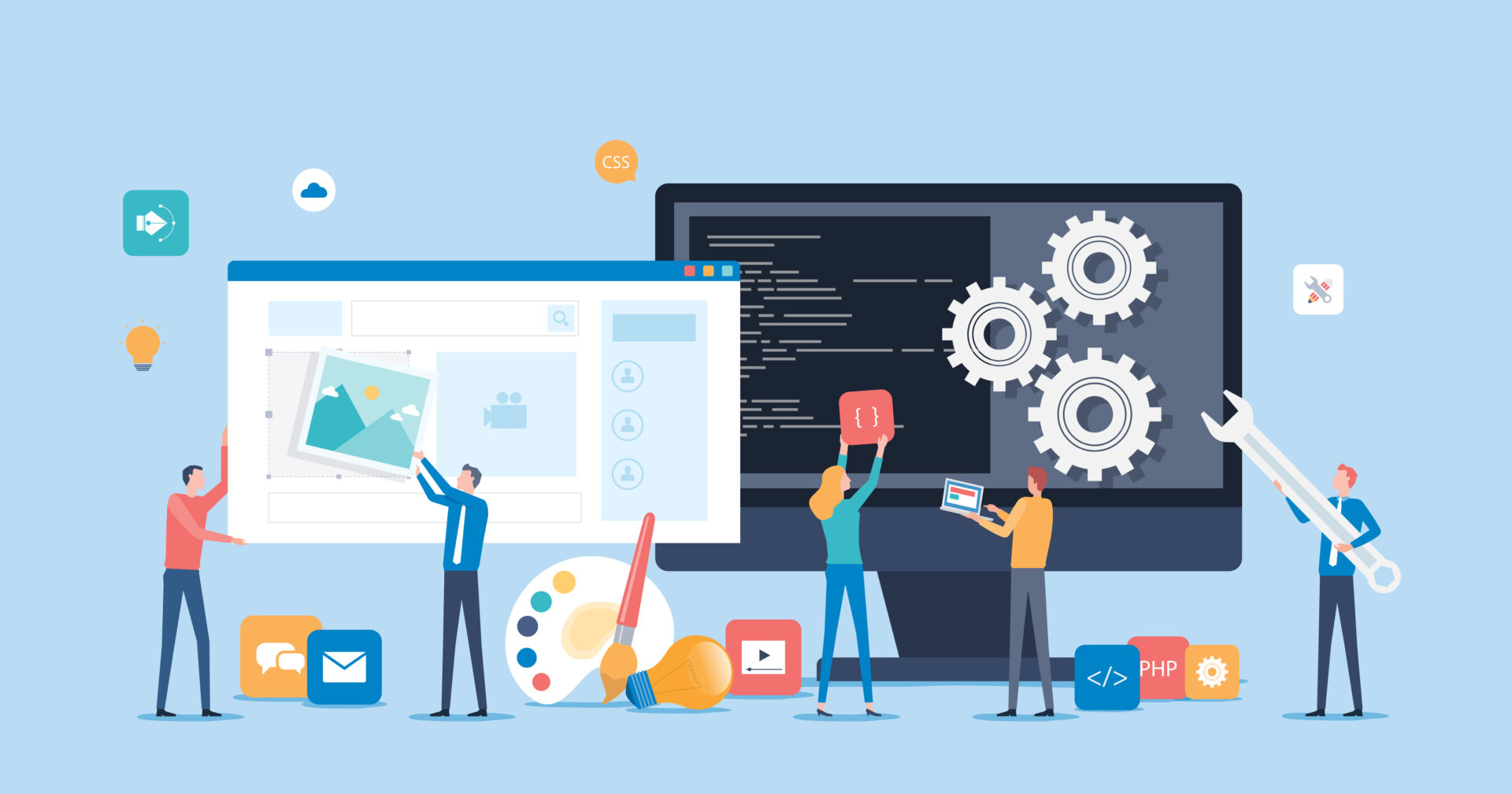
Website design and development serve two distinct but equally important roles in a successful web project. Design shapes how your site looks and guides user experience, while development ensures it functions smoothly and performs reliably. Knowing the difference helps organizations set clear goals, avoid confusion, and choose the right solutions for their website needs.
If you’ve ever said you “need a new website,” there’s a good chance you were talking about more than one thing. For many organizations, website design and website development are treated as a single, unified task, but they actually represent two very different areas of expertise.
Understanding the distinction between design and development can help you communicate more effectively with your web team, set realistic expectations, and ultimately get better results from your digital presence.
What Is Website Design?
Website design focuses on the look, feel, and user experience of your site. It’s the part of the process where visual strategy comes into play—translating your brand identity into a digital environment that feels intuitive and engaging.
Designers are responsible for things like:
- Page layout and structure
- Branding elements (color palette, fonts, logo placement)
- Image selection and use of negative space
- Typography hierarchy
- Navigation flow and interaction cues
The goal is to create a clear visual experience that reflects your brand and purposefully guides users through the site.
Tools and Outputs
Web designers often begin with wireframes or low-fidelity sketches, then create complete mockups using platforms like Figma, Adobe XD, or Sketch. These mockups show what each page will look like on desktop and mobile, including how buttons, forms, and calls to action will appear.
Website design also includes UX (user experience) and UI (user interface) considerations. These influence how easily users can find what they need, how they move from one page to the next, and how well the site adapts to different screen sizes and devices.
What Is Website Development?
Website development is the process of building the site: writing the code that turns static design files into functioning, interactive websites. It’s about structure, functionality, and performance.
Where design asks, “What should this look like?”, development asks, “How will this work?”
Developers handle tasks like:
- Converting design mockups into responsive HTML/CSS
- Writing and integrating JavaScript for dynamic features
- Managing CMS implementation (like WordPress, Drupal, or custom platforms)
- Building database connections and APIs
- Ensuring cross-browser compatibility
- Optimizing for speed, accessibility, and security
Front-End vs. Back-End
Development is typically split into two main categories:
- Front-end development is everything users see and interact with in their browsers—buttons, animations, layout adjustments, etc.
- Back-end development powers everything behind the scenes—databases, servers, custom plugins, and content management systems.
Some developers specialize in one or the other, while full-stack developers are fluent in both.
Where Design and Development Overlap
Although design and development are different disciplines, they need to work hand in hand. The most successful websites result from close collaboration between the two from the very beginning of a project.
Examples of where they intersect:
- Responsive design: A designer may create a layout for mobile, but it’s the developer who ensures it adapts correctly at every screen size.
- Animations and interactive features: Designers often specify hover states or transitions, which developers bring to life with JavaScript and CSS.
- Accessibility: Designers consider things like color contrast and focus states, while developers implement alt text, ARIA labels, and keyboard navigation support.
In other words, design sets the vision. Development makes it real and usable.
Why This Distinction Matters for Your Business
Knowing the difference between website design and development helps you make smarter choices when planning a site project.
Better Scoping and Budgeting
Design-only projects (like a visual refresh) often cost less and take less time than complete rebuilds. Development-heavy projects, such as migrating platforms or adding new functionality, require different resources and timelines. If you know which you’re dealing with—or whether you need both—you can better plan your investment.
Clearer Communication
When you’re talking to your team or a vendor, saying, “We’re happy with the design, but we need development support” helps everyone get on the same page faster. It also helps you ask the right questions and understand what’s happening during each phase of the project.
Choosing the Right Partner
Some agencies only offer design. Others focus purely on technical builds. When you understand your needs, you can look for a partner who provides exactly what your project requires.
What M&R Brings to the Table
At M&R, we don’t treat design and development as separate silos. Our brand strategists, designers, and developers work together from day one, ensuring the final product is as strategic as it is functional.
That means:
- Brand-aligned design that reflects who you are and where you’re going
- Performance-optimized builds that are fast, secure, and easy to maintain
- Responsive collaboration between creative and technical teams throughout the project
Whether you’re planning a refresh, a rebuild, or a complete rebrand, we’ll help you align visuals, structure, and performance to meet your goals. Contact us for a consultation, and get clarity on how to move your website forward with confidence.
Let’s make your website something to celebrate. Contact us today: 478-621-4491
Detailed Marketing Deets
Want some profound insight into all things marketing? Check out our Definitive Guide Series for detailed information, tips, and advice regarding: