

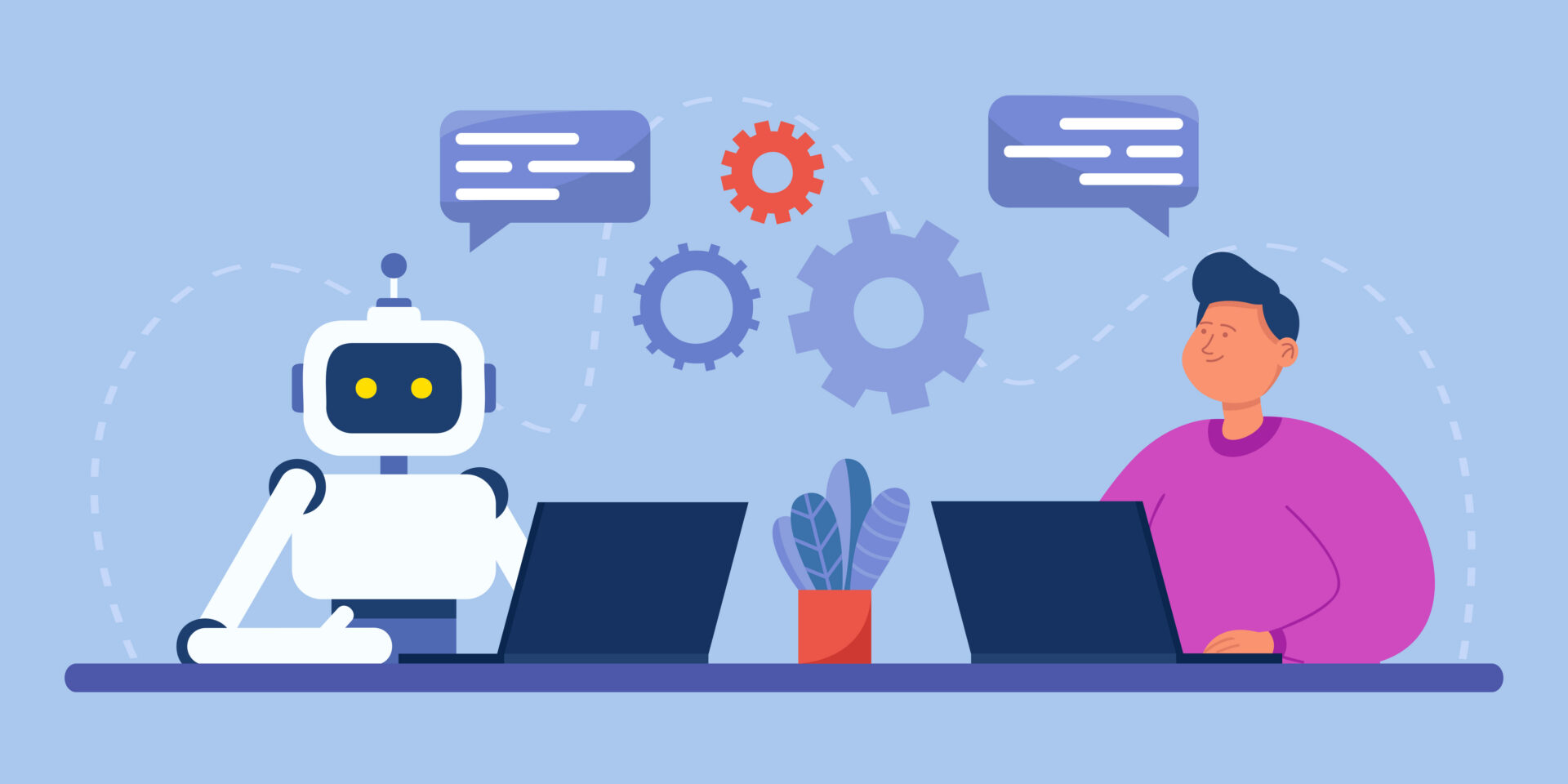
Every week, there’s a new AI tool promising to transform your marketing. Write your ads in seconds. Generate a month of social content in an afternoon. Build a full email campaign while you’re at lunch.
Some of those promises hold up. A lot of them don’t. And for most business owners, the harder question isn’t whether AI is useful — it’s whether they’re using it in a way that actually moves their business forward, or just adding another tool to the pile.
AI has real value in marketing. It also has real limits. Understanding both is what separates businesses that use it well from businesses that spend money chasing efficiency while quietly degrading their brand.
What AI Is Genuinely Good At
Let’s start with the honest case for AI, because there is one.
Research and synthesis
AI tools are exceptionally good at compressing large amounts of information quickly. Competitive research, industry trend summaries, keyword data, and audience behavior patterns — tasks that used to take a team member hours — can now take minutes. That’s a real productivity gain, and it’s one of the clearest ways AI earns its keep in a marketing workflow.
Ideation and first drafts
AI can help break creative blocks. Asking it to generate ten different angles on a campaign concept, or to produce a rough draft of a blog post for a human to refine, is a reasonable and productive use of the technology. The key word there is “refine.” A first draft from an AI tool is exactly that: a starting point, not a finished product.
Personalization at scale
For businesses with large email lists or substantial ad audiences, AI-driven personalization tools can tailor content to individual behavior in ways that would be impossible to do manually. When this is done well, it drives measurable improvements in open rates, click-through rates, and conversions.
Campaign optimization
Platforms like Google Ads and Meta’s ad manager already use machine learning to optimize bids, creative content, and audience targeting in real time. This kind of AI-powered automation is genuinely useful, and most businesses running paid advertising are already benefiting from it, whether they realize it or not.
Repetitive, rules-based tasks
Scheduling, reporting, tagging, segmenting, and routing are all tasks AI handles well and quickly. Removing this kind of manual labor from a marketing team’s plate is a legitimate win.
Where AI Falls Short
Here’s where the conversation gets more important, especially for businesses that have leaned heavily into AI-generated content.
AI can’t give you a point of view
The most persuasive marketing content carries a perspective. It reflects a position, a belief, a take on the industry that feels like it came from a real person who has thought deeply about the work. AI generates plausible language, not genuine conviction. There’s a difference, and audiences feel it even when they can’t articulate it.
AI doesn’t know your customers
It knows patterns derived from other businesses’ customers. Understanding of your clients’ specific concerns, their language, the way they talk about the problem your business solves comes from relationships, from conversations, from years of doing the work. No AI tool has access to that, and no prompt can substitute for it.
AI produces sameness
When many businesses use similar tools with similar prompts, the output starts to converge. The same phrases. The same structure. The same safe, inoffensive, forgettable messaging. Brands that rely heavily on AI-generated content without strong human editorial oversight often end up sounding like everyone else in their category, which is the opposite of effective marketing.
AI can’t build trust on its own
Trust in a brand is earned through consistent, authentic communication over time. It’s built through the quality of a real interaction, a thoughtful piece of content that acknowledges a genuine pain point, a social post that shows who your people actually are. AI can assist with the volume side of that equation, but it can’t replace the substance.
AI doesn’t understand your strategy
It responds to prompts. It doesn’t know where your business is trying to go, what has worked for you historically, how your sales cycle works, or what your audience needs to hear at each stage of their decision-making. Strategy requires human judgment. AI is a tool in service of that judgment, not a replacement for it.
The Question Businesses Should Actually Be Asking
Most conversations about AI in marketing are framed around the question: “How much can AI do for us?”
The better question is: “What does AI free us up to do?”
When AI handles research, drafting, scheduling, and optimization, the humans in a marketing operation can spend more time on the things AI genuinely can’t do: building relationships, developing strategy, exercising creative judgment, and producing content that carries a real point of view.
That’s the version of AI adoption that produces compounding results. Businesses that use AI to eliminate judgment — to produce content faster with less human involvement — often end up with higher volume and lower quality, which is a trade-off that tends to surface in their numbers over time.
What AI Still Needs From You
Regardless of how sophisticated the tools become, AI-assisted marketing still requires several things that only your business can provide.
A clear brand voice
AI will try to reflect whatever style and tone you give it. If your brand voice isn’t defined and documented, AI-generated content will be inconsistent at best and generic at worst. The more clearly you can articulate how your business sounds with what you say, what you don’t say, and what you stand for, the more useful AI becomes as a production tool.
Strategic direction
Someone still needs to decide what to say, when to say it, and who to say it to. AI can help execute a strategy. It can’t create one. The editorial and strategic decisions that shape a marketing program have to come from people who understand the business, the market, and the customer.
Human review and judgment
AI-generated content should always be reviewed and refined by someone with knowledge of your brand and your audience before it goes out. Not because AI always gets it wrong, but because the gap between “accurate” and “right for this moment, this audience, this brand” requires a human call.
Authentic source material
AI works best when it has something real to work from: your actual case studies, your real customer stories, your team’s genuine expertise. Feeding AI tools rich, authentic source material produces better output than asking them to generate from scratch.
AI as a Tool, Not a Strategy
The businesses that get the most from AI marketing tools are the ones that treat them as exactly that: tools. Not a strategy, not a shortcut, not a replacement for expertise or relationships.
Used well, AI makes a capable marketing team more productive. Used as a substitute for strategy and judgment, it produces content that sounds like marketing but doesn’t actually do what marketing is supposed to do.
The difference usually shows up in results before it shows up anywhere else.
AI in Marketing FAQs
What can AI do for my marketing?
AI is most useful for research, content drafting, campaign optimization, personalization at scale, and automating repetitive tasks like scheduling and segmentation. It increases efficiency when used alongside, not instead of, human judgment.
What are the limitations of AI in marketing?
AI cannot replace brand voice, strategic thinking, or genuine customer relationships. It generates language based on patterns rather than insight, which means content produced without human refinement often sounds generic and fails to differentiate a business.
Is AI-generated content bad for SEO?
Not inherently, but thin, generic, or duplicative AI content can hurt search performance. Search engines and AI platforms reward content that demonstrates real expertise, original perspective, and genuine usefulness. Human refinement and strong editorial standards matter.
Should my business be using AI marketing tools?
Most businesses can benefit from some AI tools, particularly for efficiency gains in research, scheduling, and optimization. The important thing is to use them intentionally, with clear standards for what still requires human involvement.
How do I use AI without losing my brand voice?
Document your brand voice clearly before using AI as a production tool. Define your tone, your language patterns, what you never say, and how you address your audience. Use that documentation to guide prompts and to evaluate AI-generated output before it goes live.
Can AI replace a marketing agency?
No. AI can assist with execution, but it lacks the strategic judgment, industry knowledge, audience insight, and creative leadership that an experienced marketing team provides. The most effective approach combines AI efficiency with expert human strategy.
Yes, Marketing Is Getting More Complex. Fortunately, M&R Is Really Good at It.
AI has changed the marketing landscape, and that’s not going away. What hasn’t changed is the need for a clear strategy, a distinctive brand voice, and the human judgment to know the difference between content that’s fast and content that’s actually effective.
That’s where M&R comes in. Our team helps businesses navigate the realities of modern marketing, including how and where AI fits into a strategy that produces real growth.
Call us at 478-621-4491 to start the conversation, or reach out to one of our business development managers.
Detailed Marketing Deets
Want some profound insight into all things marketing? Check out our Definitive Guide Series for detailed information, tips, and advice regarding: