


Technology isn’t a line item anymore—it’s how companies sell, deliver, protect, and scale. The systems that move files, secure data, connect teams, and serve customers are the operational backbone for almost every organization.
That reality creates enormous opportunities for IT and tech services providers, such as managed service providers (MSPs), data and cloud firms, installers and integrators, telecom providers, ISPs, and adjacent specialists. It also creates a brutal marketing challenge: nearly everyone sells a version of the same thing, and the moment you sound like everyone else, you’ve already lost the room.
The temptation is to load your message with acronyms and features. It’s understandable; those are the tools of your trade. But decision-makers don’t buy tools; they buy outcomes. When your marketing reframes technology as a path to business results (uptime, velocity, compliance confidence, predictable costs), you invite non-technical leaders into the conversation and give technical stakeholders what they need to make a case internally.
Our Definitive Guide to IT Marketing is for providers who want to move off the commodity shelf. Success here doesn’t look like the flashiest dashboard or the longest spec sheet. It looks like consistent growth built on trust; fewer price-only conversations; faster consensus in buying groups; churn that declines because expectations are clear; and a brand that earns authority by educating, not intimidating.
In this guide, we’re addressing the challenges and solutions IT and tech services companies tend to face when it comes to marketing their business, as well as the solutions that move them from “just another option” among audiences to “the most valuable option to choose.”
Why Marketing Matters in the IT Industry
Most IT firms lose not from lack of capability but from lack of visibility. Marketing builds trust by:
- Translating expertise into outcomes. Buyers care less about technical terms and more about avoiding downtime, data loss, or compliance fines.
- Differentiating in a sea of sameness. Clear points of distinction—vertical expertise, service model, client retention—become magnets.
- Building relationships. Prospects want long-term partners, not transactions.
- Setting expectations. Transparency on scope, response, and limits improves satisfaction and retention.
- Fueling growth. Referrals plateau; marketing sustains the pipeline and future-proofs against market shifts.
Challenges and Realities of IT Marketing
IT services overlap: MSPs run infrastructure, MSSPs add security, data firms manage storage, ISPs handle connectivity, and integrators make it all work together. Buyers don’t care about categories, they want accountability and smooth interoperability.
Purchases usually involve both a technical evaluator and a business or finance leader. Marketing must speak to both: outcomes in plain terms, plus credible detail on reliability, security, and process.
Sales cycles are long, and recurring revenue is the goal. To win, providers need to prove value early and make switching feel safe.
Some key constraints facing IT marketers include:
- Services often look the same, pushing decisionmakers toward price over function.
- Buyers are risk-sensitive; they want safe bets.
- Intangible services demand visible proof of reliability.
- Local logistics limit what you can actually deliver.
Marketing for IT firms means overcoming sameness, jargon, and split decision-makers. Trust grows when providers make reliability visible, show compliance expertise, and publish real proof (metrics, case studies, certifications).
Other realities:
- Intangibility breeds fear. The status quo feels safer than switching unless you show evidence.
- Mismanaged expectations cause churn. Clear scope and service levels protect both sides.
- Complex sales cycles demand nurturing. Marketing must guide prospects long before an RFP.
- Tone matters. Teach without condescension; prospects will expect the same in a crisis.
- Delivery pressures undercut marketing. Consistency, even if light, beats sporadic bursts.
The bottom line is that businesses who promote their unique value with clarity and social proof win.
Channels, Tactics, and Watchpoints for IT & Tech Services Marketing
Content Marketing as a Cornerstone
For IT and tech service providers, content is often the first impression. A blog post that explains ransomware prevention or a guide to telecom cost savings informs, demonstrates expertise, and builds trust before the first conversation. Strong content comes in two forms:
- Cornerstone assets such as whitepapers, playbooks, or definitive guides that address complex issues in depth.
- Ongoing updates like blogs, newsletters, or social posts that answer everyday questions and keep your company visible.
Both work together. Cornerstone content positions you as an authority, while ongoing updates keep the conversation while building trust and proving experience and expertise.
Visibility in Search Engines
Search engines are the front door for most buyers. Marketing here requires a mix of search engine optimization and paid ads. Organic SEO helps you capture early research queries like “best MSP for law firms,” while paid ads put your name at the top when prospects are ready to buy. Success depends on pairing both approaches with focused landing pages that match the user’s intent.
Social Media Presence
LinkedIn is where executives and IT leaders go for credibility checks, and a consistent presence here helps establish authority. Share short insights, client success stories, and practical tips that show your understanding of fundamental business problems. Paid campaigns can extend reach further, particularly when offering something of value, such as a compliance checklist or a webinar invite. Facebook can also matter for small and mid-sized businesses where owners use personal feeds to explore vendors.
Email Marketing for Long Sales Cycles
Technology contracts often take months to close. Email ensures your company stays visible during that waiting period. A monthly newsletter with timely advice, paired with automated nurture campaigns tied to prospect behavior, provides steady touches without overwhelming the inbox. The goal is to educate and reassure, not to sell aggressively.
Events and Webinars
Face-to-face interactions remain persuasive. Local MSPs can benefit from hosting community workshops, while larger providers can run virtual webinars focused on pressing topics such as compliance risks or cloud migrations. These formats let buyers see your expertise in action, ask questions, and gauge how you interact with clients.
The Role of Reviews and Listings
For many prospects, the first stop is not your website but your Google Business listing or a review site like Clutch. Keeping these profiles accurate and active is non-negotiable. A steady stream of current reviews signals ongoing performance. Silence or a backlog of unanswered complaints quickly raises red flags.
Practices That Build Trust
Speak in Plain English
The fastest way to lose a prospect is to bury them in acronyms and technical detail. Business leaders care about uptime, productivity, and risk instead of how a protocol works or which patch cycle you follow. When you explain technology in terms of business outcomes, you invite the decision-maker into the conversation. A CFO who hears, “We’ll cut your downtime by half this year,” is far more likely to listen than one who hears, “We’ll optimize your VMware environment.” Clear communication is itself a differentiator in a crowded market.
Show Industry Depth
Many MSPs and tech firms advertise the same broad list of services. What makes one provider stand out is a proven track record in a specific vertical. An IT company that understands the compliance pressures of healthcare, or the data privacy obligations of a law firm, immediately has an edge. Specialization also makes your marketing sharper. Content, case studies, and even ad copy become more convincing when they directly reference the challenges of a given industry.
Use Case Studies Strategically
Abstract promises don’t build confidence, but proof always does. Case studies demonstrate how your team solved a real problem and what results followed. Strong examples don’t just highlight success; they also acknowledge the hurdles along the way. A story about migrating a client to the cloud carries more weight when you explain the initial pain points, how you resolved them, and what measurable improvements came afterward. By walking prospects through the journey, you make it easier for them to imagine themselves as the next success story.
Be Transparent About Expectations
IT marketing often collapses when reality doesn’t match the promise. Overstating response times or guaranteeing flawless uptime creates a gap between marketing and delivery that quickly erodes trust. Instead, marketing should reinforce realistic expectations: when clients can expect immediate help, what types of issues may take longer, and how communication works when problems escalate. This kind of honesty not only sets the right tone for the sales cycle but also reduces client churn later on.
Stay Consistent Over Time
Technology contracts don’t close overnight. Prospects may research providers for months before making contact. Consistency across channels, such as regular blog posts, scheduled email updates, and a steady social media presence, keeps your company visible throughout that cycle. Even if an individual newsletter or post doesn’t drive a call right away, the cumulative effect of consistent visibility is powerful. It positions you as reliable and reinforces that you’ll be there when the client needs help.
The Execution Playbook: How to Create Effective IT Marketing
Step One: Build a Foundation of Insight
Execution begins with clarity. A marketing program cannot succeed without a deep understanding of who the audience is, what problems they face, and how they define value. For IT companies, that means going beyond technical specs and identifying the language business leaders use to describe their pain points. This foundational research also includes examining competitors to understand where they crowd the market and where market gaps exist. Without this groundwork, campaigns risk becoming indistinguishable noise.
Step Two: Shape the Brand Narrative
With insights in hand, the next phase focuses on sharpening the brand story. A provider that positions itself only on “fast response times” or “expert engineers” sounds identical to dozens of others. The narrative must go further, tying services directly to outcomes like resilience, growth, or risk reduction. Here, consistency matters more than volume. A few clear, well-supported themes carried across every channel build recognition and trust more effectively than a scattershot approach.
Step Three: Align Channels Around Strategy
No channel works in isolation. Website content, social media, paid advertising, and email campaigns need to reinforce one another rather than compete for attention. Execution at this stage is about sequencing and balance. For example, a social post may spark awareness, an email may deepen engagement, and the website may serve as the credibility check before a prospect makes contact. The channels must form a coherent journey instead of a collection of disconnected efforts.
Step Four: Create Space for Proof
Prospects in this industry rarely commit without evidence. Execution should therefore include opportunities to showcase results—through case studies, testimonials, or thought-leadership content. These assets act as social proof, validating claims and demonstrating the provider’s ability to deliver. The key is to integrate them naturally into campaigns rather than treating them as add-ons. Proof should sit alongside promises, reinforcing them at every stage of the buyer’s journey.
Step Five: Establish Feedback Loops
Even the strongest strategy requires refinement. Execution without feedback risks stagnation. Building regular review points into the plan ensures that campaigns adapt to shifts in audience behavior, search algorithms, or competitive pressures. In practice, this means measuring engagement, lead quality, and conversion trends, then using those insights to adjust course. The loop doesn’t have to be fast, but it has to be consistent.
Step Six: Scale With Discipline
Once core campaigns are proven effective, execution shifts toward scaling. That may mean expanding into new industries, adding new geographies, or layering in more advanced tactics. The discipline comes in resisting the urge to scale too quickly. Stretching before the foundation is solid can weaken results and dilute the brand’s voice. Controlled, deliberate growth in which new initiatives build directly on what’s working creates momentum without chaos.
Measurement and Metrics: Knowing What’s Working
The most effective IT marketing strategies evaluate performance based on outcomes. Without measurement, firms risk mistaking busyness for progress. Metrics bring clarity, showing whether a campaign is reaching the right audience, building trust, and generating real opportunities.
Beyond Vanity Numbers
Pageviews, likes, and impressions all have their place, but they don’t always tell the story that matters. A thousand clicks mean little if none of those users fit the profile of your ideal client. For IT firms, where each new contract can represent years of recurring revenue, the quality of engagement matters more than quantity. The goal is to measure how well marketing is connecting with decision-makers and moving them through the buyer’s journey.
Key Performance Indicators That Matter
- Lead Quality, Not Just Lead Volume: Tracking the percentage of inbound inquiries that match your target profile is more telling than counting total leads.
- Conversion Rates Across the Funnel: From landing page form fills to scheduled demos, prospects’ progression shows whether your messaging is compelling enough to move them forward.
- Cost Per Acquisition (CPA): Knowing what it costs to secure a qualified client helps determine whether marketing spend is sustainable and scalable.
- Customer Lifetime Value (CLV): IT services often involve long-term contracts. Measuring the projected revenue per client provides context for evaluating CPA.
- Retention and Upsell Metrics: Renewals, expansions, and cross-sells are just as important as new contracts, since a strong marketing engine should reinforce loyalty as much as acquisition.
- Brand Visibility Indicators: Search engine rankings, share of voice in local markets, and mentions in relevant industry conversations give a sense of how visible and authoritative the firm is becoming.
Aligning Metrics With Business Goals
The numbers only matter if they’re tied to strategic objectives. A provider focused on breaking into the healthcare sector might track leads from medical practices as a separate category. A company aiming to improve retention should measure customer satisfaction and renewal rates. Aligning metrics with business goals ensures that measurement reflects progress toward outcomes that matter, not just marketing motion.
The Long View
IT services sales cycles are often long, sometimes stretching months or even years. That makes patience and persistence critical when analyzing metrics. Early indicators such as increased brand searches, more qualified inbound inquiries, or improved site engagement signal whether the strategy is gaining traction, even before contracts are signed.
IT Marketing Is Easier With a Trusted Partner
All of this can be daunting, but you don’t have to navigate it alone. M&R has guided IT and tech service providers through these same challenges, building strategies that connect with decision-makers, strengthen client relationships, and drive measurable growth. Here are a few examples of how we’ve helped IT companies translate complex offerings into compelling stories and real results.
From A New Website to a New Way of Doing Business: Allied Business Systems
Founded in 1978, Allied Business Systems (ABS) is a consumer finance software developer that provides custom solutions and compliance expertise to consumer financing companies across the country. ABS primarily focuses on offering lending solutions—like its loan origination software, absVision—that simplify and streamline the lending process for both borrowers and loan officers or company team members.
The Need
In 2018, ABS was under new leadership and approaching its 40th anniversary, and the company was looking to enter its next chapter with a fresh, updated brand. ABS wanted to rebrand itself from the ground up. As a member of the financial software industry, it needed its brand to communicate its commitment to modern, cutting-edge technology clearly. The goal of the rebrand was to boost the company’s position in its evolving market.
The Solution
M&R Marketing dove deep into conversations with ABS’s leadership team to ensure we fully understood its goals following the rebrand. Once goals and strategies were established, we reimagined ABS’s messaging, logo, website, print materials, and all other marketing collateral. Our marketers created and implemented a comprehensive marketing plan around the rebrand that focused on its growth within the financial services sector.
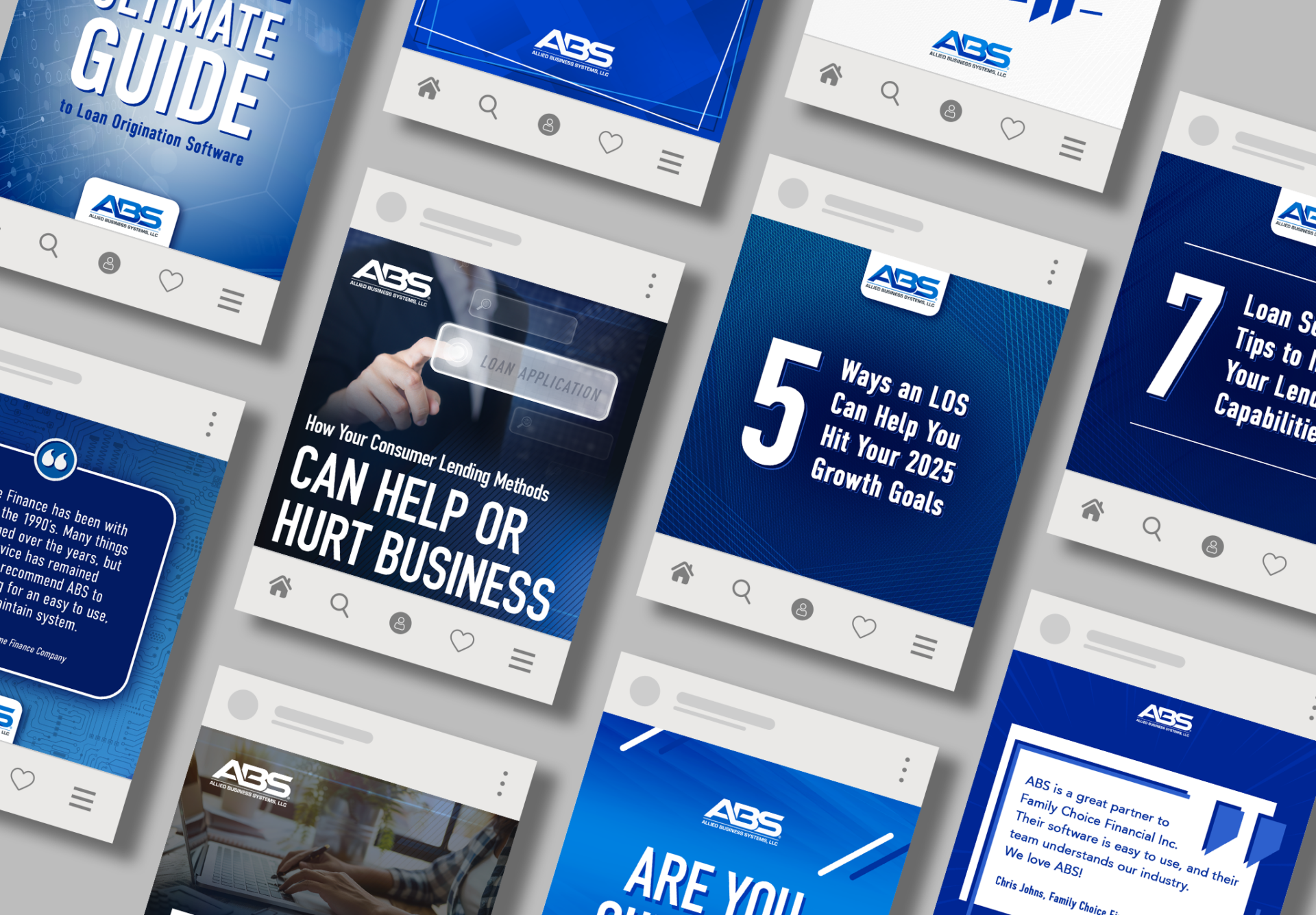
Our solutions included:
- Business Growth & Strategy
- Digital Advertising
- Search Engine Marketing (SEM)
- Search Engine Optimization (SEO)
- Social Media Management
- Website Development
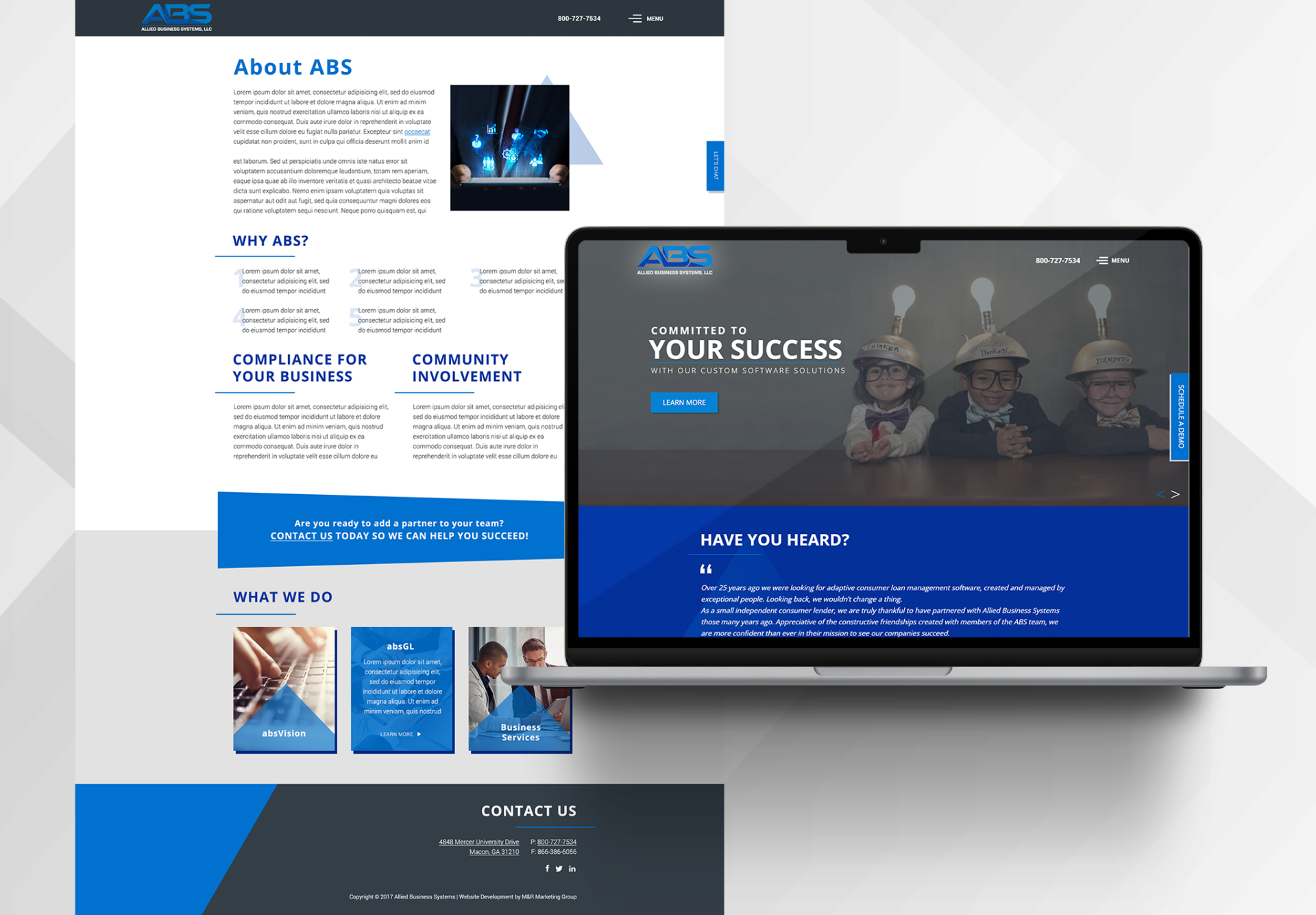
The Results
Since partnering with ABS, the company has continued to increase software installs year after year and grown in size. By bringing in M&R Marketing as a trusted marketing partner, its team strengthened its internal focus on software development and sales, allowing M&R to handle the brunt of ABS’s external marketing efforts.
Increasing a Sunshine State IT Firm’s Visibility: MHD
Based in Tampa, FL, with a second location in Palm Beach, MHD is a managed services provider specializing in IT services for the healthcare industry. As a full-service provider, they also offer access control, cabling, security, and other related services.
The Need
MHD approached M&R in 2023 with some of the concerns that are common to operators in the IT space: a bloated website, outdated branding, and a mismatch between their marketing and the realities of their business. They needed an updated, streamlined website that focused on the outcomes of their work, not just the tools they used to accomplish it.
They also wanted a revised brand, something that would better position MHD as a competent, effective partner for businesses in healthcare and other verticals than their existing brand.
Finally, they wanted to improve overall visibility in their twin markets of Tampa and West Palm Beach, increasing the number of decision-makers with knowledge of MHD and their services.
The Solutions
Our team went on a mission of discovery, exploring MHD’s business and client base and evaluating its existing branding and marketing efforts.
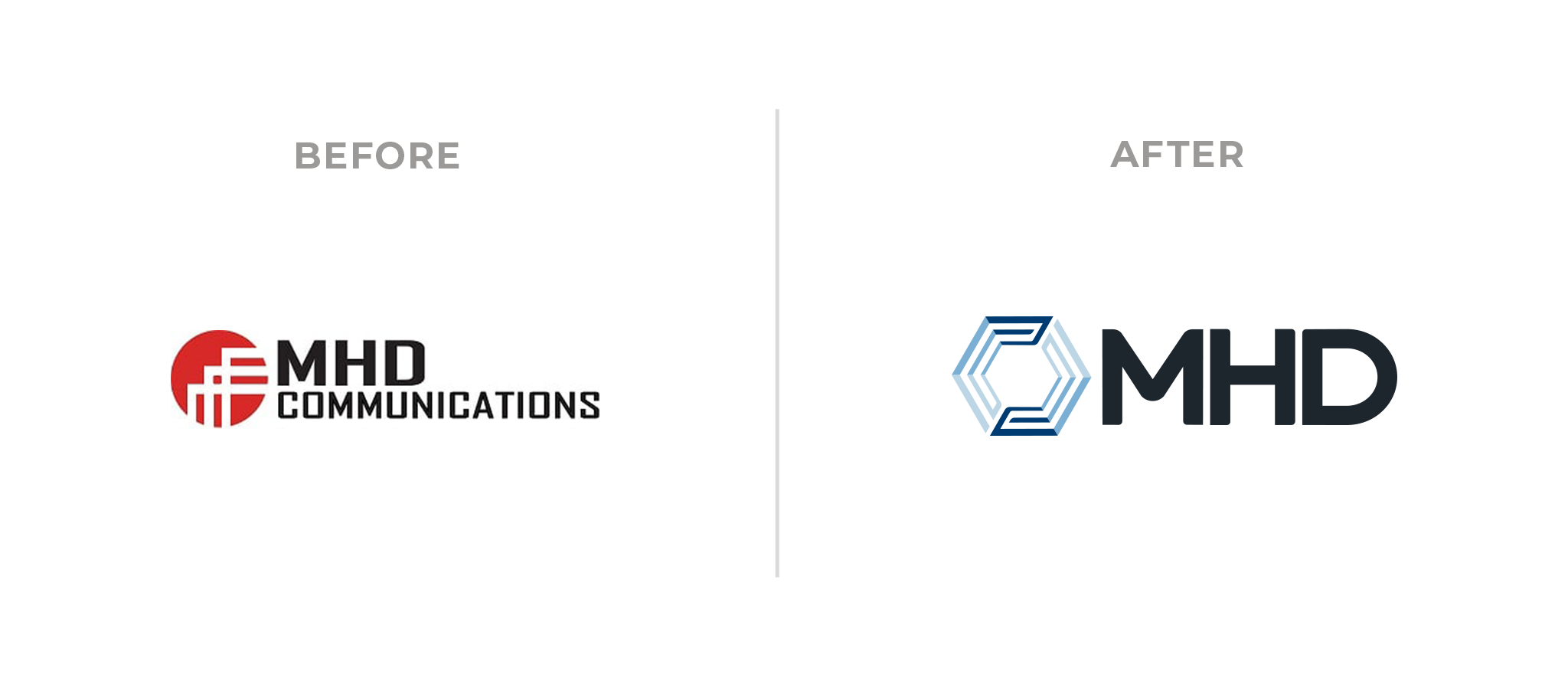
Before we started any other projects, we got to work on MHD’s brand. Our designers created a new logo and visual identity for the company, giving it a crisp new look with a geometric symbol that indicates precision and technical skill.
Our copywriting team, designers, and developers worked together to design and launch a new website for the Florida IT firm. The new site focuses on explaining how MHD’s services help improve:
- Workflow and other efficiencies
- Employee effectiveness
- Operating costs
- Equipment longevity
- Ease of maintenance
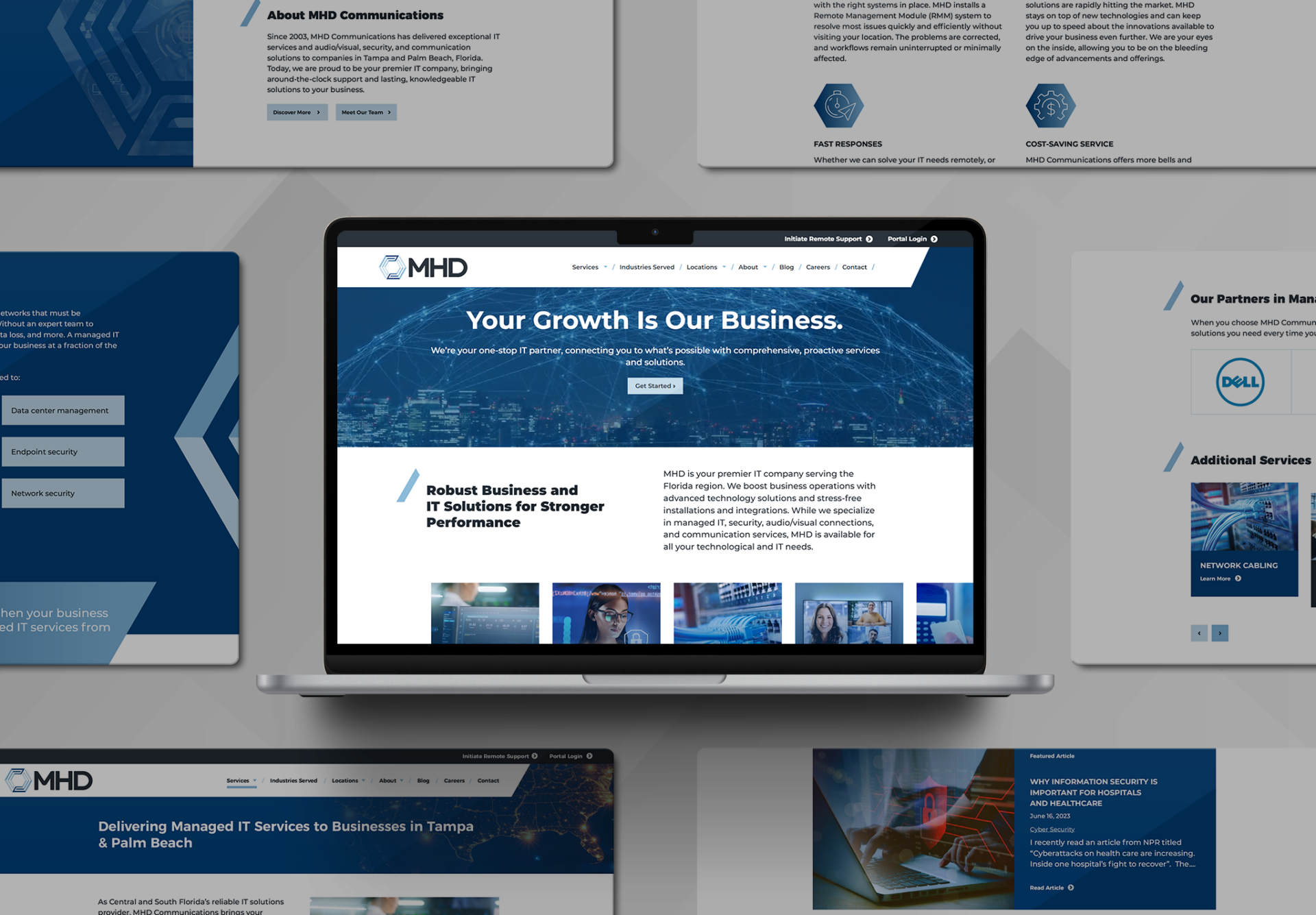
By focusing our attention on outcomes instead of process, we were able to build a site that speaks to all members of the C-suite, not just to the IT leads. The site’s professional, clean, and well-organized design gives users a solid UX that shepherds them through the entire buyer’s journey.
Finally, we launched digital ads on Google, Bing, and other platforms to put MHD’s name and new brand in front of a highly targeted audience in the Tampa and West Palm regions. By focusing our ads on one specific service at a time and targeting an audience that is likely to have pain points that service can resolve, we sought to improve lead quality as well as visibility.
The Results
Since starting their partnership with M&R, MHD has seen regular quarter-over-quarter growth in website traffic and engagement. The site now ranks higher in searches for specific topics that our blog-driven content strategy targeted, and future content strategies will continue to position MHD as a thought leader in its industry.
The digital ad campaign has also worked well for the firm, delivering dozens of high-quality leads, each with a significant lifetime value.
Our Proven Process
Regardless of your type of organization or your branch of IT, M&R follows a proven process for crafting your effective, IT marketing strategy:
Discover: Before we begin any project, we start by thoroughly exploring your practice or organization. We discover your story, values, target market, and goals. Without this vital information, we cannot move forward in good faith.
Strategize: Based on our discovery, we will develop a highly customized strategic marketing solution designed to target your specific needs.
Communicate: We clearly communicate your vision and project goals to the team members assigned to your project(s).
Create: While every step in our proven process requires creativity, this is the point where our creative juices really start flowing as we create and launch your strategic solutions to market.
Evaluate: Launch does not equal complete. We must evaluate performance data after the go-live date to see what’s working, what areas could use improvement, and how to adjust to optimize your marketing efforts.
Making This Magic Work for You
Your company deserves the same level of attention and expertise. At M&R, we bring a proven mix of strategy, creativity, and execution that helps IT firms cut through the noise and win business. We’re fearless in tackling tough markets, thorough in our preparation and research, and compelling in how we position your brand.
Ready to see what that looks like for your company? Call us today and let’s get started: 478-621-4491
More Definitive Guides From M&R Marketing: