


If your social media strategy looks roughly the same as it did three or four years ago, you’re not alone. A lot of businesses built their approach during a period when the rules were relatively stable, and they’ve been running the same playbook ever since: post consistently, grow your following, stay active on the channels where your audience lives.
That approach isn’t wrong, exactly. But it’s incomplete in ways that matter more now than they did in 2022, and businesses that haven’t revisited the fundamentals are increasingly finding that the effort they’re putting in isn’t producing the results it used to.
Social media has changed in ways that are structural, not cosmetic. The platforms have changed their priorities. Audiences have changed their behavior. The metrics that used to signal progress have become, in many cases, misleading. And the types of content that drive real business outcomes look different than they did even two or three years ago.
Here’s what’s actually shifted and what it means for your strategy.
Follower Count Is No Longer the Goal
For most of social media’s history, follower count was the primary scoreboard. More followers meant more reach, more brand visibility, and more perceived credibility. Agencies pitched follower growth as a core deliverable. Brands measured success in new page likes and subscriber counts.
That metric is no longer a reliable indicator of anything that matters.
Platform algorithms across Facebook, Instagram, LinkedIn, and TikTok have all shifted toward distributing content based on engagement signals rather than follower relationships. A post from an account with 500 followers that generates strong early engagement can reach far more people than a post from an account with 50,000 followers that generates none. The platforms have made it explicit: they show content to people they think will engage with it, regardless of whether those people follow the account.
What this means in practice is that a large, disengaged following is not an asset. In some cases, it’s a liability: low engagement rates relative to follower count are a signal that suppresses distribution. Businesses that spent years optimizing for follower growth without attention to engagement quality may find that their large audiences aren’t being shown their content at all.
The shift in focus has to be from quantity to quality. Reach that comes from genuine interest and engagement is worth far more, in terms of both distribution and business outcomes, than reach that comes from inflated follower numbers.
Organic Reach Has Declined Significantly Across Most Platforms
Even with engaged audiences, organic reach has contracted meaningfully on the major platforms. Facebook’s organic reach for business pages has declined to a fraction of what it was five years ago. Instagram has shifted heavily toward paid distribution and Reels-based discovery. LinkedIn’s feed has become more competitive as professional content has proliferated.
This isn’t a recent development, but its implications are still not fully reflected in most businesses’ social strategies. If you’re relying on organic posting alone to drive meaningful reach, you’re working with a smaller megaphone than you might realize.
The effective response to this isn’t simply to spend more on ads, though paid social remains one of the highest-ROI digital channels when done with strategic precision. It’s to understand the interplay between organic and paid distribution, and to develop a strategy that uses each for what it does best. Organic content builds credibility, nurtures existing audiences, and signals brand vitality. A paid social ads strategy extends reach, targets specific audiences with precision, and drives measurable conversion outcomes. Businesses that use both in a coordinated way consistently outperform those that rely on either alone.
Short-Form Video Has Become the Dominant Format
The most significant format shift of the past several years is the dominance of short-form video. Reels on Instagram and Facebook, Shorts on YouTube, and TikTok’s native format have collectively reshaped what audiences expect when they open a social app.
The data on this is unambiguous. Short-form video consistently delivers higher organic reach, higher engagement rates, and stronger audience retention than static image posts or long-form content on most platforms. The algorithms actively prioritize it. Audiences actively prefer it. And yet, many businesses continue to build their social presence primarily around static images and text-based posts because video feels more complicated, more expensive, or more uncomfortable.
It’s worth examining whether those assumptions are accurate. Short-form video doesn’t require high production value, it requires authenticity and relevance. Behind-the-scenes content, quick how-to clips, team introductions, client stories told in under a minute: these formats perform well precisely because they feel human and unpolished. The bar to entry is lower than most businesses think, and the ceiling on performance is much higher than static content can reach.
For businesses that have resisted video because of the production concern, the more useful question isn’t “how do we produce high-quality video?” It’s “what do our customers genuinely want to see?” The answer to that question usually leads to content that’s more accessible to create than a polished brand commercial, and often more effective.
Engagement Quality Has Replaced Engagement Volume
Related to the shift away from follower count is a broader shift in how sophisticated marketers think about engagement. Likes and impressions, the traditional shorthand metrics for social performance, have become less meaningful as platforms have optimized for time-on-platform rather than meaningful interaction.
What matters more now is the quality and intent behind engagement signals.
- Comments that involve real conversation.
- Saves, which indicate that content was valuable enough to return to.
- Shares into stories or direct messages, which signal that the content resonated enough to pass along.
- Link clicks that indicate genuine interest in learning more.
These behaviors are stronger signals of audience investment than passive likes, and they’re the signals that platforms use to determine what to show more of.
Businesses that build their social strategies around generating these deeper engagement signals tend to build audiences that are smaller but more loyal, more responsive, and more likely to convert into actual customers.
Social Media’s Role in the B2B Landscape Has Grown
Social media strategy is no longer exclusively a B2C discipline. LinkedIn, in particular, has matured into a serious channel for B2B brand building, thought leadership, and lead generation, and organizations that have treated it as an afterthought are beginning to recognize what they’ve left on the table.
Growing B2B Connections with the Georgia Mining Association
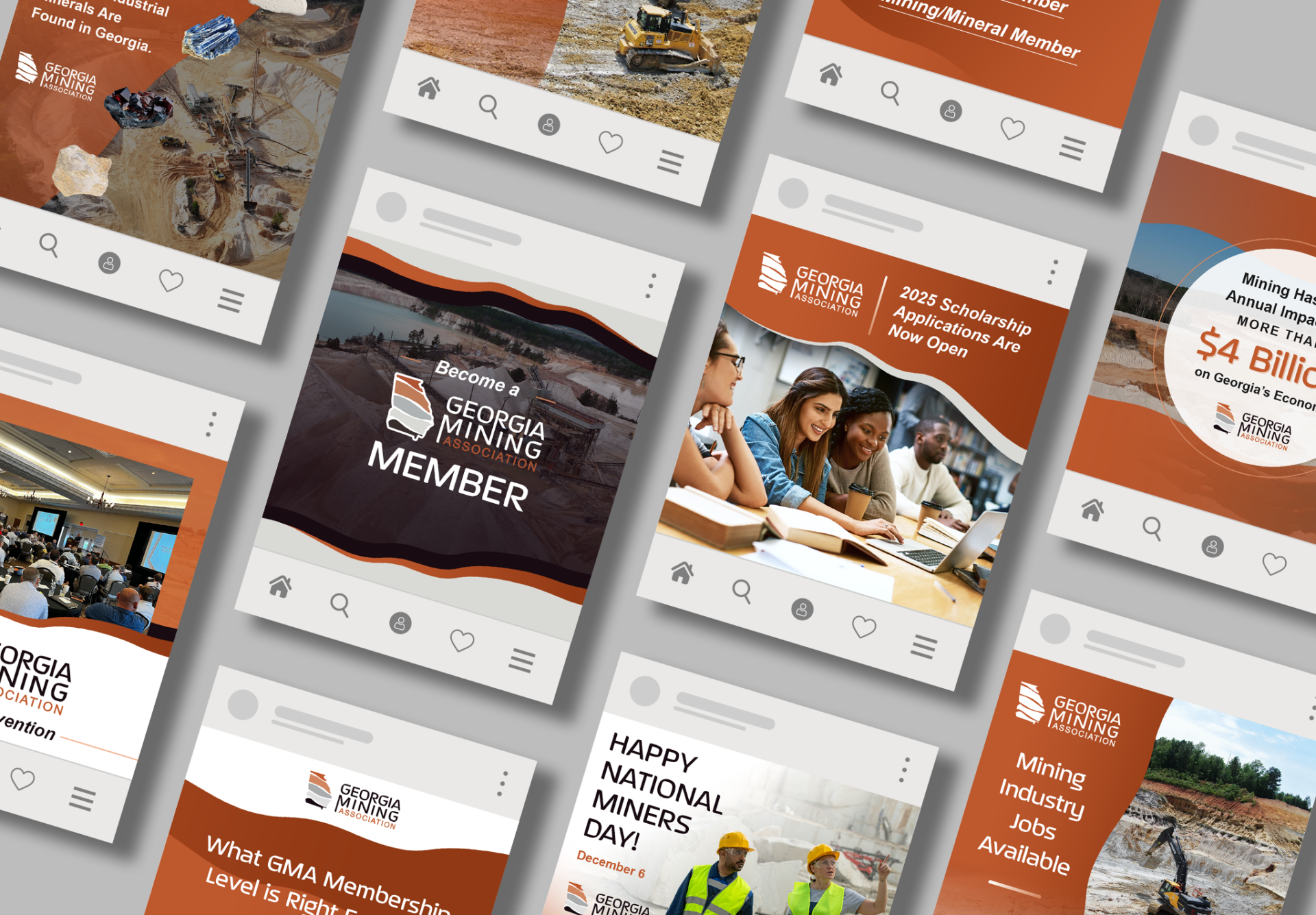
When M&R partnered with the Georgia Mining Association (GMA) on a full rebrand, social media was a central component of the strategy. GMA needed to modernize its image, expand its reach within the minerals industry, and better communicate its value to members, legislators, and the public. M&R launched and managed their LinkedIn presence as part of a broader rebrand that also included a new logo, website, and brand identity.
The results in the first five months were substantial: more than 43,000 LinkedIn impressions and nearly 1,700 engagements, alongside a 60% increase in website engagement and a doubling of site visitors following the brand launch. For a trade association in a niche industry, those numbers represent meaningful reach into exactly the audiences GMA needed to influence.
The lesson isn’t specific to LinkedIn or to trade associations. It’s that B2B organizations that approach social media with the same strategic seriousness as B2C brands tend to find audience and engagement that their competitors, who are still treating social as optional, have left uncontested.
What Strong Social Media Performance Actually Looks Like
Major Social Wins for the Georgia National Fair
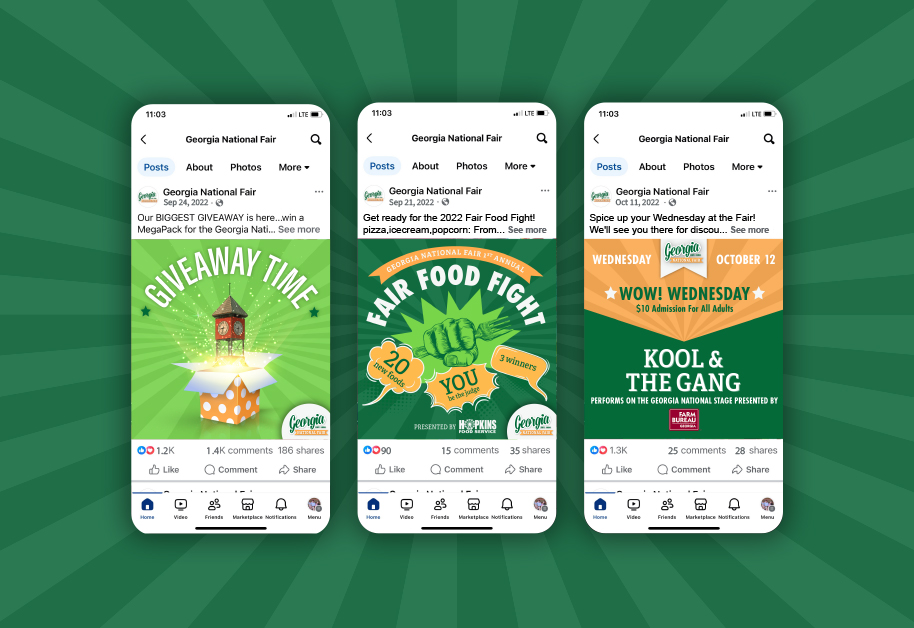
The Georgia National Fair offers one of the more compelling examples of what happens when social media is approached as a genuine strategic channel rather than a box to check.
The Fair engaged M&R in 2022 to manage their Facebook and Instagram presence, including on-site content creation during the eleven-day event, social media ads, and email marketing. In M&R’s first year managing the accounts, audience reach, profile visits, and page follows and likes were up by an average of 30%. Google Analytics performance data attributed approximately $87,000 in ticket sales to traffic from the Fair’s social platforms, representing a 219% return on investment.
The relationship has grown significantly since then. The 2025 GNF campaign generated more than 36 million campaign impressions, 41% social follower growth in two months, and $891,300 in online revenue, all alongside a record-breaking attendance figure of 612,700 fair-goers.
Those results didn’t come from posting more often or growing a follower count for its own sake. They came from a strategy built around the right content formats, targeted paid amplification, on-site video and photography that gave audiences a reason to engage, and a consistent presence that kept the Fair top-of-mind in the months leading up to the event.
A Healthy Social Presence: Langford Allergy
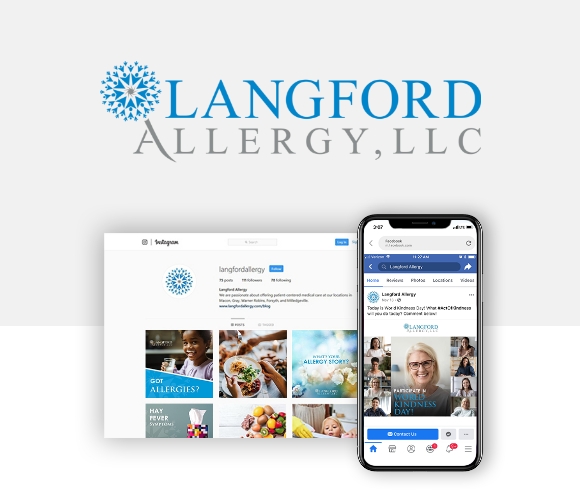
Langford Allergy offers a complementary example from a very different industry. In a single year, M&R’s Facebook management for the practice reached 2.86 million people and generated more than 4,100 post engagements, contributing to a broader digital strategy that drove nearly 60,000 ad clicks and more than 2,100 conversions. For a medical practice serving a regional market, that kind of reach represents a sustained competitive advantage built over years of consistent, strategic social investment.
What a 2026-Ready Social Strategy Looks Like
Updating a social strategy for the current environment doesn’t require starting from scratch. It requires revisiting some foundational assumptions about what the goal is, which metrics signal progress, and whether the content mix reflects how audiences actually behave on these platforms today.
The businesses that are getting the most from social media in 2026 tend to share a few characteristics. They’ve moved away from follower count as a primary measure of success and toward engagement quality and conversion outcomes. They’ve incorporated video, particularly short-form video, as a core part of their content mix rather than an occasional addition. They use organic and paid social in coordination, understanding the role each plays in a complete strategy.
They measure the right things, including saves, shares, click-throughs, and downstream conversions, rather than optimizing for vanity metrics that feel good but don’t connect to business goals. And they treat social media as an ongoing strategic investment rather than a campaign-based activity that gets attention when something is being promoted and goes quiet in between.
If any of those characteristics don’t describe how your current social media operates, there’s a gap worth addressing. The good news is that the platforms are not broken. Social media still delivers meaningful reach and measurable business outcomes for organizations that approach it with the right strategy. The businesses seeing strong results aren’t doing something fundamentally different. They’re doing the same things, just with an understanding of how the landscape has changed.
Social Media Strategy FAQs
Why is my social media reach declining even though I’m posting consistently?
Declining organic reach is a platform-wide trend, not a sign that your content is failing. Most major platforms now distribute content based on engagement signals rather than follower relationships, meaning consistent posting alone is not enough to maintain or grow reach. Content quality, format selection, and paid amplification all play a larger role in distribution than they did a few years ago.
Does follower count still matter on social media?
Follower count on social media matters less than it used to. Platforms prioritize content based on engagement quality, not audience size, meaning a smaller, highly engaged audience often delivers better reach and results than a large, passive one. Growing followers is still a reasonable goal, but it should not be the primary measure of social media success.
How important is video for social media in 2026?
Having video as part of your social mix is very important in 2026. Short-form video consistently delivers higher organic reach and engagement than static content on most major platforms, and all of the major platforms actively prioritize it in their algorithms. Businesses that haven’t incorporated video into their social strategy are operating at a structural disadvantage.
How do I balance organic and paid social media?
Organic content builds brand credibility, nurtures existing audiences, and generates the engagement signals platforms use to distribute content more broadly. Paid social extends reach, targets specific audiences with precision, and drives conversion outcomes. The most effective strategies use both, with each serving its own purpose within a coordinated approach.
What social media metrics should I actually be tracking?
Focus on metrics that connect to real business outcomes: engagement rate relative to reach, saves and shares, link clicks, and downstream conversions like form submissions, calls, or purchases. Impressions and follower counts are useful context but should not be the primary measures of social media performance.
Is social media worth investing in for B2B businesses?
Yes, B2B can benefit immensely from a solid social strategy. LinkedIn in particular has become a serious channel for B2B brand building, thought leadership, and lead generation. B2B businesses that approach social media strategically, rather than treating it as optional or secondary to other channels, consistently find audience and engagement that competitors who aren’t investing have left uncontested.
How often should my business be posting on social media?
Posting frequency on social media matters less than posting quality and consistency. A realistic schedule of high-quality, engaging content will outperform a high-volume schedule of filler content. The right frequency depends on your team’s capacity to produce genuinely useful or engaging content, not on a platform-specific formula.
Social Media That Works Requires Strategy, Not Just Activity
The platforms have changed. The content formats that work have changed. The metrics that matter have changed. What hasn’t changed is that social media, done well, remains one of the most direct lines between a business and the audiences it’s trying to reach.
M&R’s social media management services are built for the current environment: strategic, platform-specific, built around content that earns real engagement, and measured against outcomes that connect to your business goals. Whether you’re starting from scratch or looking to get more from what you’re already doing, we can help.
Call us at 478-621-4491 to start the conversation, or reach out to one of our business development managers.
Marketing Details
Want some profound insight into all things marketing? Check out our Definitive Guide Series for detailed information, tips, and advice regarding: