

If your business is running on the Entrepreneurial Operating System® (EOS®), or if you’ve been exploring EOS® as a potential operations model, you’ve likely heard its core principle: a business needs both vision and traction to succeed. That idea comes to life through the Visionary/Integrator relationship that sits at the top of most EOS® Accountability Charts®.
The relationship between these two irreplaceable individuals is so important that it’s the subject of its own book—Rocket Fuel® by Gino Wickman and Mark C. Winters, one of the key texts in the EOS® ecosystem.
At M&R, we knew these roles existed. But we didn’t fully understand their power until we clarified them inside our agency. That shift became one of the biggest turning points in our growth.
Before the Transition
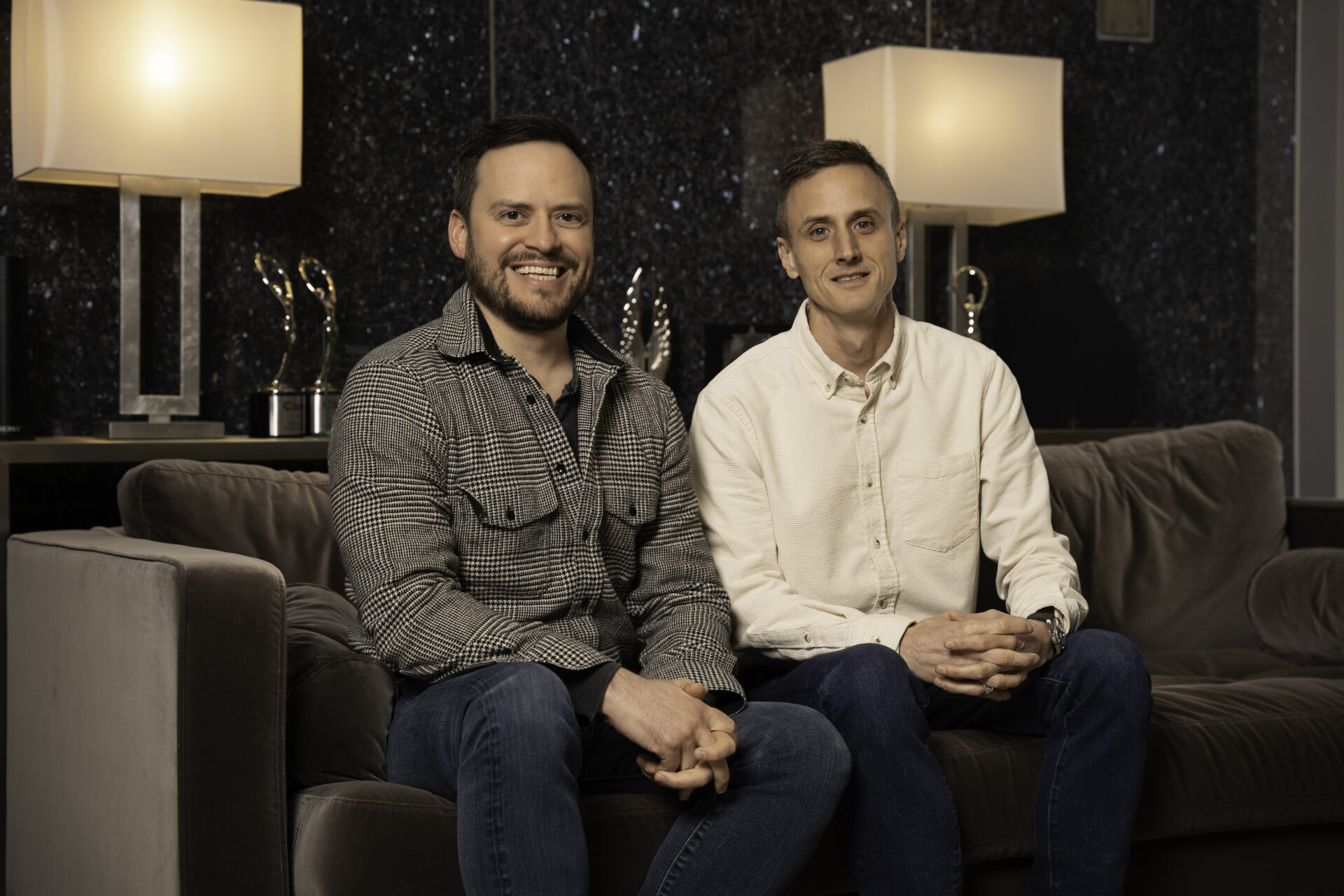
Our story is a little different from most. While some businesses spend years trying to make the right match between a Visionary and an Integrator, we were fortunate enough to fit those roles almost naturally. When Nick and I started M&R, we essentially slid into those lanes before we even knew what a Visionary or an Integrator was.
Nick has always been the vision-caster. He sees opportunities where others see obstacles. He’s full of ideas, unafraid to take bold risks, and skilled at inspiring people to believe in what’s possible. That kind of energy has been vital to M&R since day one; it’s what’s kept us moving, growing, and innovating.
I, on the other hand, have always been wired for execution. I manage day-to-day operations and make sure we hit the goals we set. My background in running small businesses since I was young has given me a deep appreciation for operational efficiency, team accountability, and transparent processes.
But before we officially clarified the Visionary and Integrator roles, those natural tendencies weren’t enough. We were constantly stepping into each other’s lanes. Nick found himself getting bogged down in operational details that drained his energy, and I was often in a gray area of authority, unsure whether a decision fell to me or to him. It wasn’t dysfunctional, but it was definitely inefficient.
That lack of clarity created drag. And in an agency that thrives on momentum, drag kills speed.
Discovering the Visionary/Integrator Magic
Before we begin, it is important to understand that… all human beings have a God-given set of capabilities—what Dan Sullivan would call ‘Unique Ability.’ Or, in other words, a true skill set…
— Gino Wickman & Mark C. Winters, Rocket Fuel
When our EOS® Implementer first pushed us to define the Visionary and Integrator roles formally, it didn’t take long for us to see where we fit. The real challenge was to come: releasing control.
For Visionaries, letting go of day-to-day details can feel risky. The Visionary’s name is often on the door; they’ve built the company with their own two hands, and they care deeply about every part of it. But their strength lies in generating new ideas, nurturing relationships, and steering long-term direction, not in managing every process.
For Integrators, the challenge is different. Taking complete ownership of execution means being the final decision-maker in areas that once belonged to the Visionary. That can be intimidating. But it’s essential. As Rocket Fuel explains, “For an organization, [the Integrator] is the glue, the Visionary’s right hand; they beat the drum and make sure the trains run on time.”
Once Nick and I drew those lines clearly and stuck to them, the difference was immediate.
Letting Go to Move Faster
Clarifying our roles wasn’t just an administrative change; it was a cultural one.
Nick shifted his focus to the parts of the business where he creates the most value, such as strategy, relationships, and growth. He explores partnerships, envisions where the agency is headed, and inspires our team with that sense of purpose.
Meanwhile, I stepped fully into the Integrator role, managing the leadership team, aligning priorities, and turning that vision into actionable plans. My job became ensuring that our Rocks stayed on track, that accountability stayed clear, and that everyone in the organization understood what success looked like week to week.
That division of labor didn’t just make things smoother; it made us faster. Decisions that once took days of back-and-forth were made in minutes. Teams got clearer direction. Projects started and finished without unnecessary detours.
Letting Go, Part II
For us, letting go has been a continual process. While we’ve effectively moved our ownership responsibilities into the right Visionary or Integrator lanes, we’re also a small shop with several departments. At various times, either of us have needed to sit in another seat alongside our V/I seats.
Whenever we end up in another seat (or realize we’ve sat down without knowing it!), our primary goal is to get out of it by hiring or promoting. Nick, for instance, spent more than a year leading our Digital team and Development team while still acting as Visionary. During that time, we worked to identify, prepare, and promote team members to take on those leadership roles, allowing Nick to return to occupying his Visionary seat full-time.
In a similar vein, I was recently able to get out of the Marketer seat that I’d held since our first Accountability Chart and pass those responsibilities to a team member, letting me become a full-time Integrator.
What “Rocket Fuel” Has to Do With It
One of my favorite Rocket Fuel concepts is that Visionaries and Integrators create a dynamic duo, a kind of (for lack of a better word) synergy that amplifies both people’s strengths. As Wickman and Winters put it, “There’s no denying that there is a real chemistry when [the V/I relationship] is right. Just like rocket fuel, there’s a chemical mixture that happens—and the result is a powerful expansion of force.”

That line hit home for us. The moment we stopped overlapping roles and started trusting the system, we felt the “rocket fuel” effect.
Rocket engines are among the most powerful machines ever built. Their power comes from the chemistry between propellant and oxidizer, the two components that make up every type of rocket fuel.
The propellant burns to create thrust, pushing the rocket forward. The oxidizer feeds that burn, enabling the reaction to reach its full potential. That’s precisely how the Visionary and Integrator work together.
Nick is our propellant: the creative force, the spark that ignites big ideas.
I’m the oxidizer: the system, discipline, and focus that keeps that spark from burning out too quickly or going off course.
Without both components, the rocket called M&R Marketing would never leave the launch pad.
How Rocket Fuel Sent Us Into Orbit
Once we embraced our distinct roles, the impact rippled across the agency.
- Decision-making became faster. There was no more confusion about who made which calls.
- Accountability improved. Teams knew exactly who to go to for direction.
- Energy increased. Nick had more space for creative thinking, and I had the clarity I needed to execute without hesitation.
- Growth accelerated. We scaled our processes, added structure, and maintained culture without burning out.
The Visionary/Integrator balance isn’t just about leadership alignment. It’s about creating organizational traction—that feeling of forward motion that everyone in the company can sense.
If your leadership team feels stuck or if your meetings feel circular, there’s a good chance your Visionary and Integrator roles are tangled. Untangling them requires trust, humility, and a little bit of letting go, and it might feel uncomfortable at first, but the payoff is massive.
At M&R, clarifying those roles gave us the fuel we needed to scale, to lead with confidence, and to move forward with purpose. It’s not an exaggeration to say that understanding the Visionary/Integrator relationship changed the trajectory of our agency.
When vision and traction align, growth becomes inevitable.
Are You Running on EOS®? M&R Marketing Is, Too, and We Know How to Help EOS® Companies Thrive!
No matter what vertical you’re in, if you’re using EOS® to grow your business, we’re ready to help. We’ve provided dozens of EOS® companies with marketing services that have helped them reach their audience, drive conversions, and see measurable success. We know how to integrate our work into your existing rhythms and tailor your marketing to specifically target the goals in your V/TO®.
Give us a call at 478-621-4491, and let one of our friendly business development managers give you some things to think about and discuss at your next L10!
Discover More EOS® Insights from M&R Below!